Growth axis
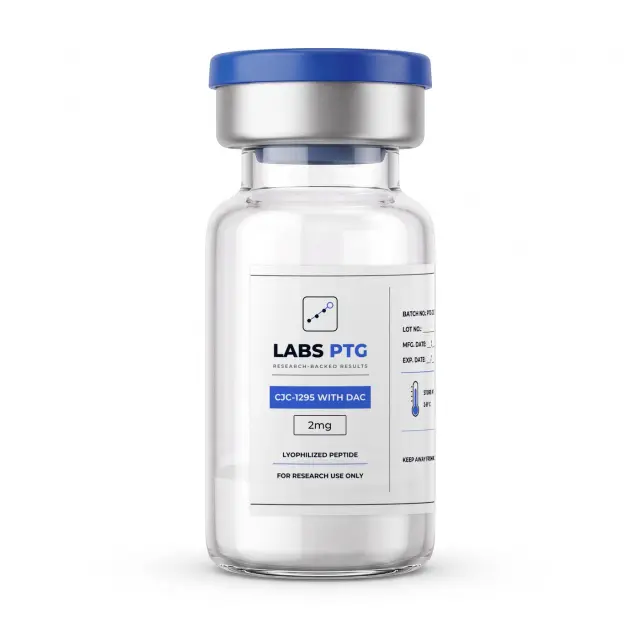
CJC-1295 with DAC
A GHRH 1-29 analogue carrying a drug-affinity-complex modification for longer persistence
£20.902mg
 ≥99% HPLC
A shortened GHRH analogue (residues 1-29) used to study GHRH receptor binding and hypothalamic-pituitary signalling.
In stock, dispatched same day before 16:00
Sold for research purposes only. For in-vitro laboratory research. Not a medicine and not for human or animal consumption. Supplied to qualified individuals aged 18 and over; you confirm this at checkout.
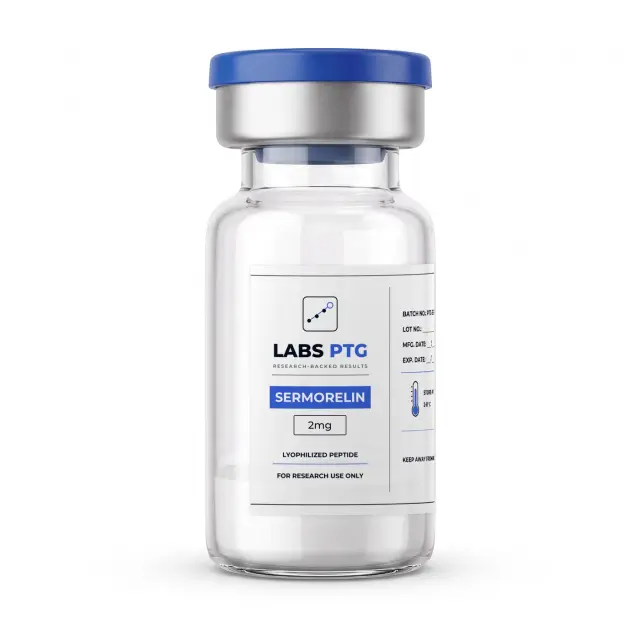
Sermorelin is a shortened analogue of growth-hormone-releasing hormone, a 29-residue peptide often called GRF 1-29, with a C-terminal amide. It is studied in vitro and in preclinical models of GHRH receptor binding and hypothalamic-pituitary signalling. Supplied at 2mg as a lyophilised powder for in-vitro laboratory research only.
Residues 1 to 29 of the GHRH sequence are described as the shortest fragment that keeps the activity of the full-length hormone in receptor assays. The fragment binds the GHRH receptor on pituitary somatotrophs and raises cAMP through Gs coupling. Because it has no protection against dipeptidyl peptidase IV, sermorelin is cleaved quickly in biological media, which has made it a standard comparator for newer and more stable GHRH analogues.
In the laboratory it serves as a reference agonist in GHRH receptor-binding and cAMP assays, in release assays with primary pituitary cultures, and in stability studies where its degradation rate is compared with that of modified analogues such as CJC-1295 and tesamorelin. It is supplied as a lyophilised powder in a 2mg vial.
Store the lyophilised powder in a freezer, protected from moisture and light, and let the vial warm to room temperature before opening. Reconstitute with an appropriate laboratory diluent and keep reconstituted material cold.
Each lot of Sermorelin is released with a certificate recording identity and purity. Enter the lot number printed on your vial on the lab testing page to view it.
Sermorelin is the unmodified GRF 1-29 fragment. CJC-1295 carries amino-acid substitutions, including D-alanine at position 2, designed to resist peptidase cleavage, so it is generally more stable in culture media.
It is a lyophilised powder in a 2mg vial. Keep it cold, dry and away from light, and reconstitute with a suitable laboratory diluent only when the material is needed.
No. The material sold here is supplied strictly for in-vitro laboratory research. It is not a medicine, food or supplement, and it is not for human or animal use. Buyers must be aged 18 or over.
Growth axis
A GHRH 1-29 analogue carrying a drug-affinity-complex modification for longer persistence