 ≥99% HPLC
Batch testedIdentity by MS, purity by HPLC
Lot numberedCertificate filed per lot
Cold stored2 to 8 °C until dispatch
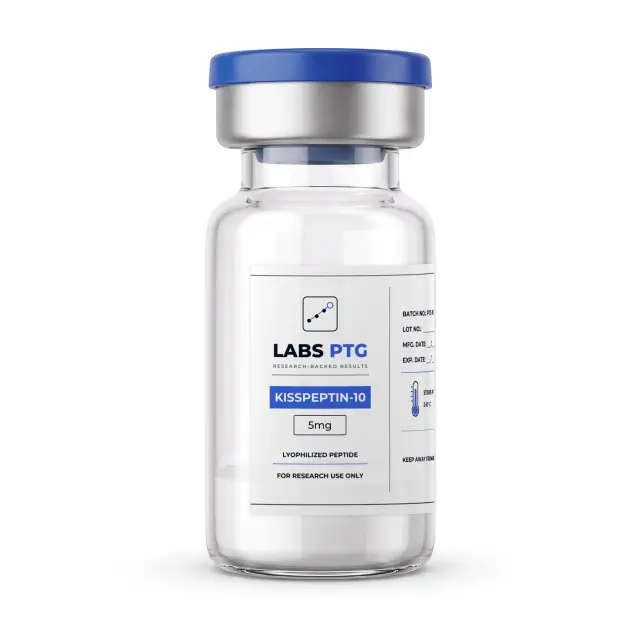
Kisspeptin-10
5mg lyophilised powderCAS 374675-21-5
The active ten-residue fragment of kisspeptin, used to study KISS1 receptor signalling and the hypothalamic-pituitary-gonadal axis.
£19.90per vial, VAT included
In stock, dispatched same day before 16:00
- Free shipping on UK orders over £20.00
- Same day dispatch on orders placed before 16:00
- Batch certificate in the COA Database
Sold for research purposes only. For in-vitro laboratory research. Not a medicine and not for human or animal consumption. Supplied to qualified individuals aged 18 and over; you confirm this at checkout.
Research overview
Kisspeptin-10 is the active ten-residue fragment of kisspeptin, with the sequence YNWNSFGLRF and a C-terminal amide, also listed as a KiSS-1-derived decapeptide. It is used to study KISS1 receptor signalling and the hypothalamic-pituitary-gonadal axis. Supplied at 5mg as a lyophilised powder for in-vitro laboratory research only.
Kisspeptins are products of the KISS1 gene and act at the KISS1 receptor, a G protein-coupled receptor also known as GPR54. The C-terminal ten residues are reported to be enough for receptor binding and activation. Signalling runs mainly through Gq, raising intracellular calcium and activating protein kinase C. In preclinical models, kisspeptin signalling is described as a central regulator of gonadotropin-releasing hormone neurons, which makes the peptide a reference tool for the hypothalamic-pituitary-gonadal axis.
Typical assays include calcium mobilisation and inositol phosphate accumulation in KISS1R-expressing cells, receptor-binding competition studies, and electrophysiology on hypothalamic neurons in rodent brain slices. Comparisons with longer kisspeptin forms help map which regions matter for potency and stability, and receptor desensitisation after repeated exposure is a further topic. It is supplied as a lyophilised powder in a 5mg vial.
Research areas
- KISS1 receptor (GPR54) binding and Gq signalling
- Calcium mobilisation in receptor-expressing cells
- GnRH neuron electrophysiology in brain slices
- Hypothalamic-pituitary-gonadal axis models
- Kisspeptin fragment structure-activity work
Specifications
- CAS number
- 374675-21-5
- Molecular formula
- C63H83N17O14
- Molecular weight
- ~1302.4 g/mol
- Sequence
- Tyr-Asn-Trp-Asn-Ser-Phe-Gly-Leu-Arg-Phe-NH2 (YNWNSFGLRF, C-terminal amide)
- Form
- lyophilised powder
- Purity
- ≥99% (HPLC)
- Also known as
- Kisspeptin-10, Metastin (10-10), KiSS-1-derived decapeptide, KISS1 receptor ligand fragment
- Supplied as
- 5mg per vial, lyophilised powder
Storage and handling
Store the lyophilised powder in a freezer, protected from moisture and light, and let the vial reach room temperature before opening. Reconstitute with an appropriate laboratory diluent and keep reconstituted material cold.
Certificates of analysis
Each lot of Kisspeptin-10 is released with a certificate recording identity and purity. Enter the lot number printed on your vial on the lab testing page to view it.
Questions
How does kisspeptin-10 differ from longer kisspeptins?
Longer kisspeptin forms share the same C-terminal sequence. Kisspeptin-10 is reported to be the shortest fragment that fully binds and activates the KISS1 receptor, so it is a convenient tool for receptor studies.
How should kisspeptin-10 be stored?
It is supplied as a lyophilised powder in a 5mg vial. Keep it cold, dry and away from light, and reconstitute with a suitable laboratory diluent only when the material is needed.
Is kisspeptin-10 a medicine?
No. It is supplied strictly for in-vitro laboratory research. It is not a medicine, food or supplement, and it is not for human or animal use. Buyers must be aged 18 or over.
Neuro and signalling
Studied alongside