 ≥99% HPLC
Batch testedIdentity by MS, purity by HPLC
Lot numberedCertificate filed per lot
Cold stored2 to 8 °C until dispatch
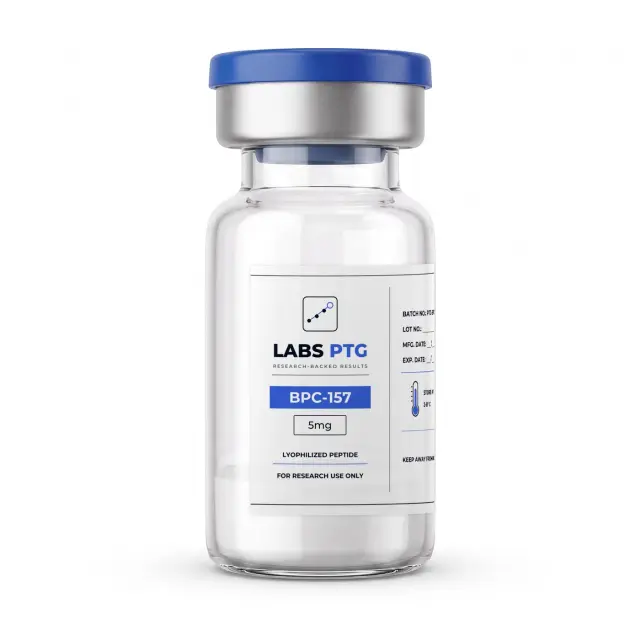
BPC-157
5mg lyophilised powderCAS 1628202-19-6
A fifteen-residue synthetic peptide derived from a gastric protein sequence, studied for nitric-oxide, growth-factor and cytoskeletal signalling in cell and preclinical models.
£13.99per vial, VAT included
In stock, dispatched same day before 16:00
- Free shipping on UK orders over £20.00
- Same day dispatch on orders placed before 16:00
- Batch certificate in the COA Database
Sold for research purposes only. For in-vitro laboratory research. Not a medicine and not for human or animal consumption. Supplied to qualified individuals aged 18 and over; you confirm this at checkout.
Research overview
BPC-157 is a synthetic fifteen-residue peptide (GEPPPGKPADDAGLV) derived from a sequence reported in a gastric protein. It is studied for nitric-oxide, growth-factor and cytoskeletal signalling in cell and preclinical models. Supplied at 5mg as a lyophilised powder, as the acetate salt, for in-vitro laboratory research only.
The name stands for Body Protection Compound, reflecting its reported origin in human gastric juice. In cell and animal models, the literature describes effects on the nitric-oxide system, on VEGFR2 expression and on FAK-paxillin signalling in fibroblasts and endothelial cells, which is linked to cell migration and vessel formation in culture. Most published work comes from a small number of research groups, and independent replication is limited, so findings should be read with that in mind.
In the laboratory it is used in endothelial tube-formation and scratch-wound migration assays, in fibroblast outgrowth studies, and in nitric-oxide and growth-factor expression work by qPCR or western blot. It is also a common model of a short, stable peptide in analytical stability studies. The material is supplied as a lyophilised powder.
Research areas
- Nitric-oxide pathway signalling in endothelial cultures
- VEGFR2 and growth-factor expression
- FAK-paxillin and cytoskeletal signalling in fibroblasts
- Scratch-wound and tube-formation assays
- Short peptide stability analysis
Specifications
- CAS number
- 1628202-19-6
- Molecular formula
- C64H102N16O24 (acetate salt); C62H98N16O22 (free base)
- Molecular weight
- 1479.6 (acetate salt, as supplied); 1419.5 (free base) g/mol
- Sequence
- Gly-Glu-Pro-Pro-Pro-Gly-Lys-Pro-Ala-Asp-Asp-Ala-Gly-Leu-Val
- One-letter code
- GEPPPGKPADDAGLV
- Form
- lyophilised powder
- Purity
- ≥99% (HPLC)
- Also known as
- BPC-157, Body Protection Compound-157, PL-14736 (research designation)
- Supplied as
- 5mg per vial, lyophilised powder
Storage and handling
Store the lyophilised powder in a freezer, protected from moisture and light, and let the vial reach room temperature before opening. Reconstitute with an appropriate laboratory diluent and keep reconstituted material cold.
Certificates of analysis
Each lot of BPC-157 is released with a certificate recording identity and purity. Enter the lot number printed on your vial on the lab testing page to view it.
Questions
What is BPC-157?
It is a fifteen-residue synthetic peptide whose sequence is derived from a protein reported in gastric juice. The name stands for Body Protection Compound-157, and PL-14736 is listed as a research designation.
How is BPC-157 supplied and stored?
It is supplied as a lyophilised powder in a 5mg vial. The listed weight refers to the acetate salt. Keep it cold, dry and away from light until it is needed.
Is BPC-157 a medicine?
No. It is supplied strictly for in-vitro laboratory research. It is not a medicine, food or supplement, and it is not for human or animal use. Buyers must be aged 18 or over.
Tissue and repair
Studied alongside
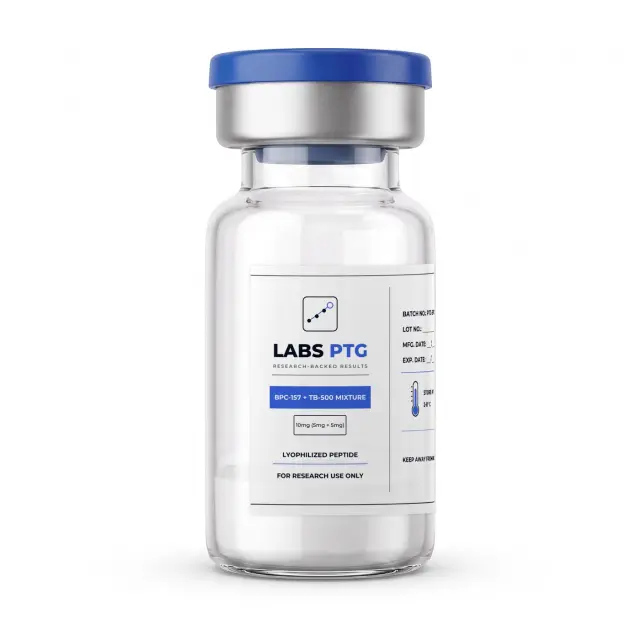
Tissue and repair
BPC-157 + TB-500 Mixture
A fixed one-to-one pre-mix of two separately sold peptides
£26.905mg + 5mg